
Your tires are the only part of your car that actually touches the road. Every stop, turn, and emergency swerve depends on four contact patches roughly the size of your hand. When the tread wears thin, those patches lose their ability to grip, especially on wet roads, and your stopping distance gets longer.
The good news is that checking tread depth takes less than five minutes and costs nothing. This guide walks you through three easy methods, explains what the numbers mean, and shows you the other warning signs that tell you it’s time for a new set.
Why Tread Depth Matters
Tread grooves do one main job: they channel water out from under the tire so the rubber stays in contact with the pavement. As the grooves get shallower, they can move less water. At highway speeds on a wet road, a worn tire can ride up on a thin film of water, which is known as hydroplaning. When that happens, steering and braking stop working as they should.
Worn tread also affects:
- Braking distance: Worn tires take noticeably longer to stop on wet pavement than new ones.
- Snow and slush traction: Deep grooves and sipes bite into snow; shallow ones pack up and slide.
- Puncture resistance: Less rubber means objects on the road can reach the belts more easily.
Understanding Tread Depth Measurements
In the United States, tread depth is measured in 32nds of an inch. Most new passenger car tires start with around 10/32″ to 11/32″ of tread, while many truck and SUV tires start deeper.
- 6/32″ and above: Good condition for most driving.
- 4/32″: Many tire experts recommend replacing tires around this point if you regularly drive in rain or snow.
- 2/32″: The legal minimum in most U.S. states. At this point, the tire is worn out.
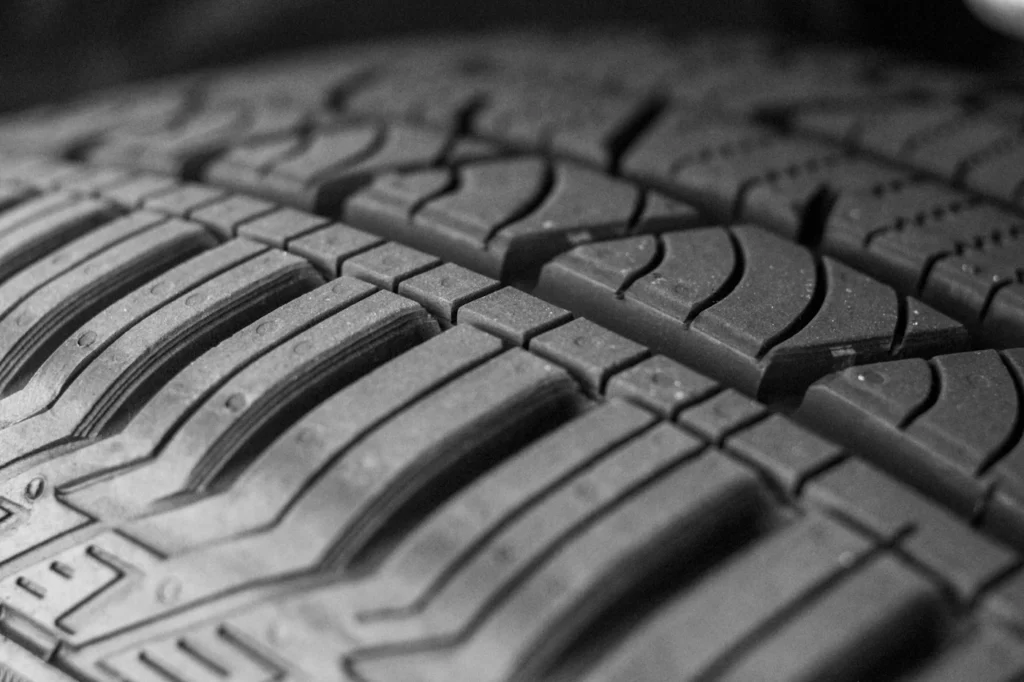
Outside the U.S., many countries use millimeters. For example, the legal minimum in the UK and much of Europe is 1.6 mm, which is roughly 2/32″. Always check the rules where you live.
Method 1: The Penny Test
The penny test is the classic quick check, and you probably have everything you need in your pocket.
- Take a U.S. penny and turn it so Lincoln’s head points down.
- Insert it into one of the main tread grooves.
- Look at how much of Lincoln’s head you can see.
If you can see the entire top of Lincoln’s head, your tread is at or below 2/32″ and the tire needs to be replaced. If part of his head is covered by tread, you still have some life left.
The limitation? The penny test only tells you when you’ve reached the legal minimum. By that point, wet-weather grip has already dropped a lot.
Method 2: The Quarter Test
For a more cautious check, use a quarter instead. The distance from the edge of a quarter to the top of George Washington’s head is about 4/32″.
- Insert the quarter upside down into a tread groove.
- If the top of Washington’s head is visible, you’re at or below 4/32″.
This is a good point to start shopping for tires, especially before the rainy season or winter.
Method 3: Use a Tread Depth Gauge
A tread depth gauge is a small, inexpensive tool sold at most auto parts stores. It gives you an exact reading and removes the guesswork.
- Push the gauge’s probe into a main groove until the base sits flat on the tread blocks.
- Read the measurement on the scale or digital display.
- Repeat across the inner, center, and outer grooves of each tire.
Measuring multiple spots matters. A tire can look fine in the center but be worn down on one edge, which is a clue that something else is wrong.
Check the Built-In Tread Wear Indicators
Every modern tire has small raised bars molded into the bottom of the grooves. These are called tread wear indicators, and they sit at 2/32″. When the surrounding tread wears down flush with these bars, you’ll see a solid strip of rubber running across the tread. That’s a clear signal the tire is done.
What Uneven Wear Is Telling You
While you’re checking depth, look at the pattern of wear. It can point to problems that will ruin your next set of tires, too.
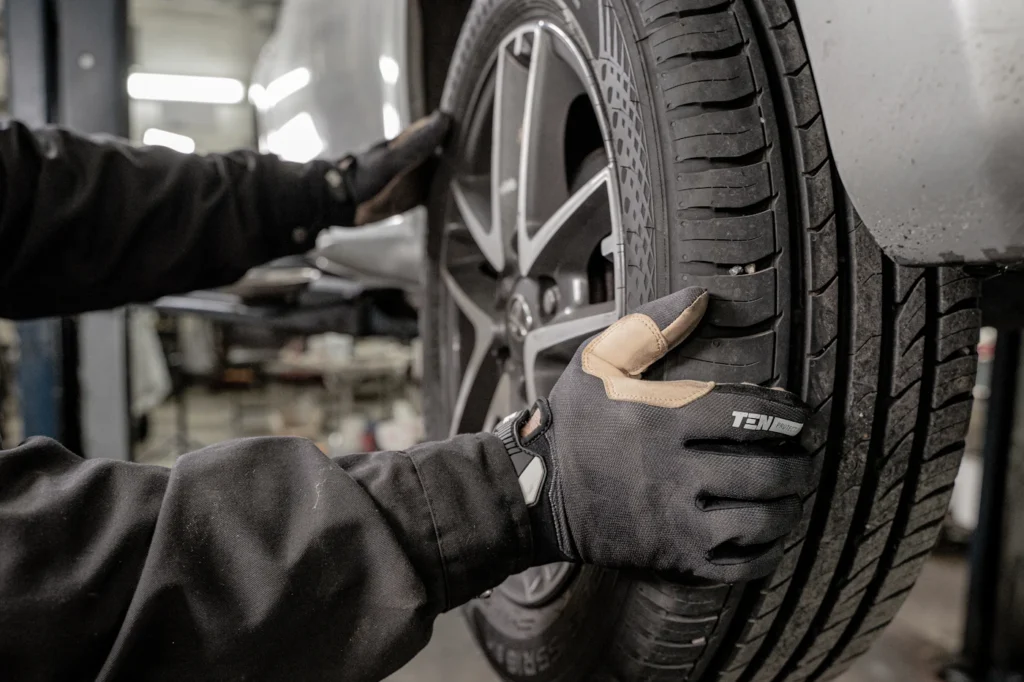
- Worn in the center: Usually a sign of overinflation.
- Worn on both edges: Usually underinflation.
- Worn on one edge only: Often a wheel alignment issue.
- Cupped or scalloped patches: May point to worn shocks, struts, or an unbalanced tire.
If you see any of these, have a tire shop check your alignment and suspension before installing new tires.
Other Signs You Need New Tires
Tread depth isn’t the only thing to watch. Replace or inspect a tire right away if you notice:
- Bulges or bubbles on the sidewall, which indicate internal damage.
- Cracks in the sidewall or between tread blocks, a sign of aging rubber.
- Vibration at speed that wasn’t there before.
- Repeated air loss that isn’t explained by a simple puncture.
Don’t Forget Tire Age
Rubber breaks down over time even if the tread looks deep. Find the DOT code on the sidewall; the last four digits show the week and year the tire was made. For example, “2321” means the 23rd week of 2021. Many manufacturers recommend having tires inspected yearly once they reach five years old and replacing them by around ten years regardless of tread. Check your vehicle and tire maker’s guidance for specifics.
How Often Should You Check?
A simple routine works best:
- Check tread depth once a month, at the same time you check tire pressure.
- Check before any long road trip.
- Check at the start of winter and the rainy season.
- Rotate tires as your owner’s manual recommends, often every 5,000 to 7,500 miles, so they wear evenly.
Pairing tread checks with other quick habits is an easy way to keep your car safer. Our guide to essential car maintenance tips every driver should know covers a few more checks worth adding to your routine.
Replacing Tires: A Few Quick Tips
- Replace in pairs at least. Tires on the same axle should match. Many all-wheel-drive vehicles require all four to be replaced together, so check your owner’s manual.
- Put the newer tires on the rear if you’re only replacing two. Most tire makers recommend this for stability in wet conditions.
- Match the size and load rating printed on your door-jamb sticker.
- Get an alignment check if you saw uneven wear.
Conclusion
Checking your tire tread depth is one of the simplest things you can do to keep yourself and your passengers safe. Grab a quarter or a cheap gauge, check each tire once a month, and pay attention to uneven wear. When you get close to 4/32″, start planning for replacements rather than waiting for the legal limit.
Want more practical car care advice? Browse the latest guides on the Toomi Online blog. If you run a tire shop, auto service business, or automotive brand, you can reach our readers through our guest post packages.