
Buying a used car can save you thousands of dollars compared with buying new. It can also leave you with someone else’s expensive problem if you don’t look closely. The difference usually comes down to preparation.
This used car buying checklist breaks the process into five stages: research, paperwork, exterior, interior and mechanicals, and the test drive. Print it out, save it to your phone, and take it with you when you go to see a car.
Stage 1: Research Before You Go
The best inspection starts before you ever see the car in person.
- Know the model’s common problems. Search owner forums and reliability surveys for the exact year and model. Some years have known transmission, engine, or electrical issues.
- Check recalls. In the U.S., you can enter the VIN on the NHTSA recall lookup at nhtsa.gov/recalls to see open safety recalls.
- Get a vehicle history report. Services like Carfax or AutoCheck can show reported accidents, title problems, odometer readings, and service records.
- Compare prices. Use pricing guides and local listings to see what similar cars with similar mileage are selling for.
If you’re still deciding what kind of car to buy, our comparison of electric vs. gas cars can help you narrow down the choice.
Stage 2: Check the Paperwork
Before you fall in love with the car, make sure the paperwork is clean.
- Title: Confirm the seller’s name matches the title. Look for words like “salvage,” “rebuilt,” “flood,” or “lemon.”
- VIN match: The VIN on the title should match the VIN on the dashboard (visible through the windshield) and the driver’s door-jamb sticker.
- Service records: Regular oil changes and scheduled maintenance are a very good sign.
- Liens: Make sure there’s no outstanding loan on the car, or that the lender will release it at sale.
Stage 3: Inspect the Exterior
Look at the car in daylight, on level ground, and when it’s dry. Rain and dim lighting hide a lot.
Body and Paint
- Walk around the car slowly and look along each panel for ripples or dents.
- Check that the gaps between panels (hood, doors, trunk) are even. Uneven gaps can mean past accident repair.
- Look for paint that doesn’t quite match between panels, or overspray on rubber seals and trim.
- Check wheel wells, door bottoms, and under the car for rust. Surface rust is common; bubbling or holes are a bigger concern.
Glass and Lights
- Look for chips or cracks in the windshield.
- Turn on every light: headlights, high beams, brake lights, turn signals, and reverse lights.
- Check for moisture inside the light housings.
Tires
- Check tread depth and look for uneven wear, which may point to alignment or suspension problems. Our guide on how to check tire tread depth shows you exactly what to look for.
- Make sure all four tires are the same brand and size, or at least matched on each axle.
Stage 4: Inspect the Interior and Engine Bay
Interior
- Smell: A musty or mildew smell can be a sign of water leaks or flood damage. Heavy air freshener can be covering something up.
- Carpets: Lift floor mats and press on the carpet. Dampness is a red flag.
- Wear vs. mileage: A car showing 40,000 miles shouldn’t have a worn-through steering wheel or pedals worn smooth.
- Electronics: Test the windows, locks, mirrors, infotainment screen, speakers, USB ports, seat heaters, and climate control, including the A/C.
- Warning lights: When you turn the key to “on,” the dashboard lights should all briefly illuminate and then go off once the engine starts. If a light never comes on at all, the bulb may have been removed to hide a problem.
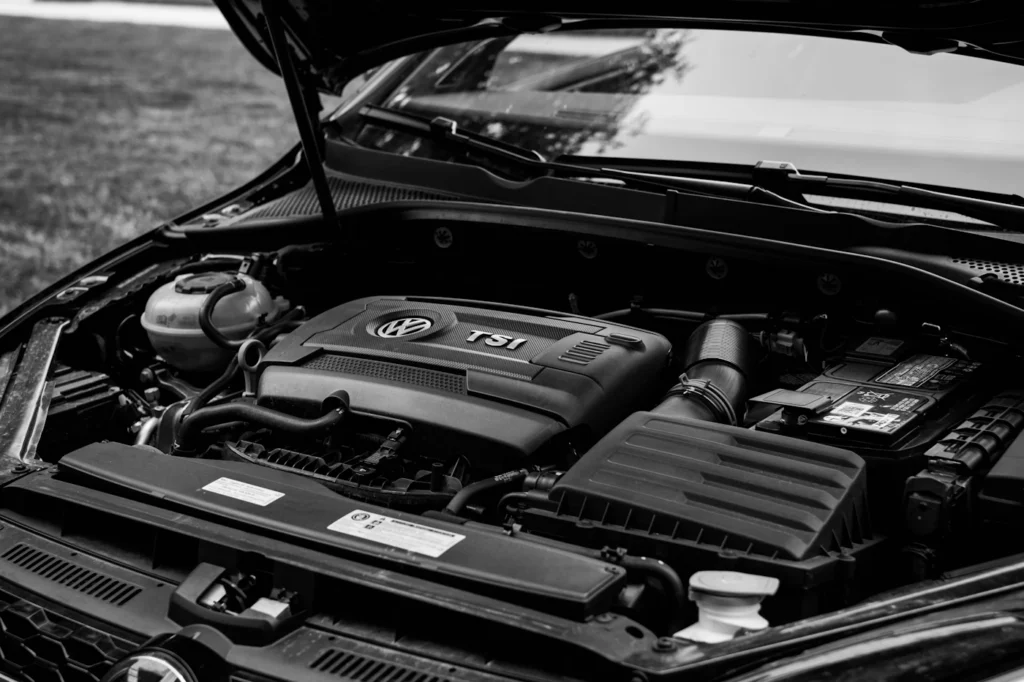
Under the Hood
Ideally, see the engine when it’s cold. A seller who warmed it up before you arrived may be hiding a hard-starting problem.
- Check the oil level and color. Very dark, gritty oil suggests neglect. A milky or foamy look on the dipstick or oil cap can be a sign of a serious engine problem.
- Look for leaks, wet spots, or fresh residue around the engine and under the car.
- Inspect belts and hoses for cracks, fraying, or bulges.
- Check the battery terminals for heavy corrosion.
- Look at the coolant reservoir. Coolant should be clean, not rusty or oily.
Stage 5: The Test Drive
Plan for at least 20 to 30 minutes and include city streets, a highway, and a quiet place to test braking.
- Cold start: Listen for knocking, ticking, or squealing when the engine first starts.
- Acceleration: It should be smooth. Hesitation or stumbling can indicate engine or fuel system issues.
- Transmission: Shifts should be smooth and timely. Slipping, clunking, or delayed engagement are warning signs.
- Braking: The car should stop straight without pulling, grinding, or pulsing through the pedal.
- Steering: On a straight road, the car shouldn’t drift to one side. The steering wheel should be centered.
- Suspension: Drive over a few bumps and listen for clunks or rattles.
- Noises at speed: Humming or grinding that changes with speed can indicate wheel bearing problems.
After the drive, pop the hood again and look for new leaks or smoke. Check that no warning lights came on during the drive.
Always Get a Pre-Purchase Inspection
Even if everything looks good, pay an independent mechanic to do a pre-purchase inspection (PPI). It usually costs a small fraction of the car’s price and can reveal problems you can’t see, like frame damage, stored trouble codes, or worn suspension parts. A seller who refuses to allow an independent inspection is giving you a good reason to walk away.
Red Flags That Mean “Walk Away”
- A salvage, rebuilt, or flood title you weren’t told about.
- The VIN on the car doesn’t match the paperwork.
- Signs of flood damage, like silt under the carpet or rust on seat rails.
- The seller pressures you to decide quickly or pay in cash immediately.
- The seller refuses a pre-purchase inspection.
Negotiating With Your Findings
Everything you find during your inspection is useful when negotiating. Worn tires, an upcoming timing belt service, or brakes that need attention all have a real cost. Get a rough estimate for each repair and use it to support a fair offer. Stay polite, be specific, and be willing to walk away. There is always another car.
Conclusion
A careful inspection is the best protection you have when buying a used car. Research the model, verify the paperwork, inspect the car in good light, take a proper test drive, and always get an independent inspection. Follow this checklist and you’ll greatly reduce your chances of an unpleasant surprise.
For more car buying and ownership advice, visit the Toomi Online blog. Are you a dealership or automotive service business? Advertise with us to reach readers who are actively shopping for cars.