
One of the biggest advantages of owning an electric vehicle is waking up to a “full tank” every morning. Most EV owners do the majority of their charging at home, which is usually cheaper and more convenient than public charging.
But home charging comes in two main flavors: Level 1 and Level 2. Choosing between them depends on how far you drive, what kind of electrical service your home has, and your budget. This guide explains the difference in plain language so you can decide what makes sense for you.
The Basics: What “Level” Means
EV charging levels describe how much power flows from the outlet to your car. More power means faster charging.
- Level 1: Uses a standard household outlet (120 volts in North America).
- Level 2: Uses a 240-volt circuit, similar to what an electric dryer or oven uses.
- DC fast charging: High-powered public stations. These aren’t installed in homes, so we won’t cover them here.
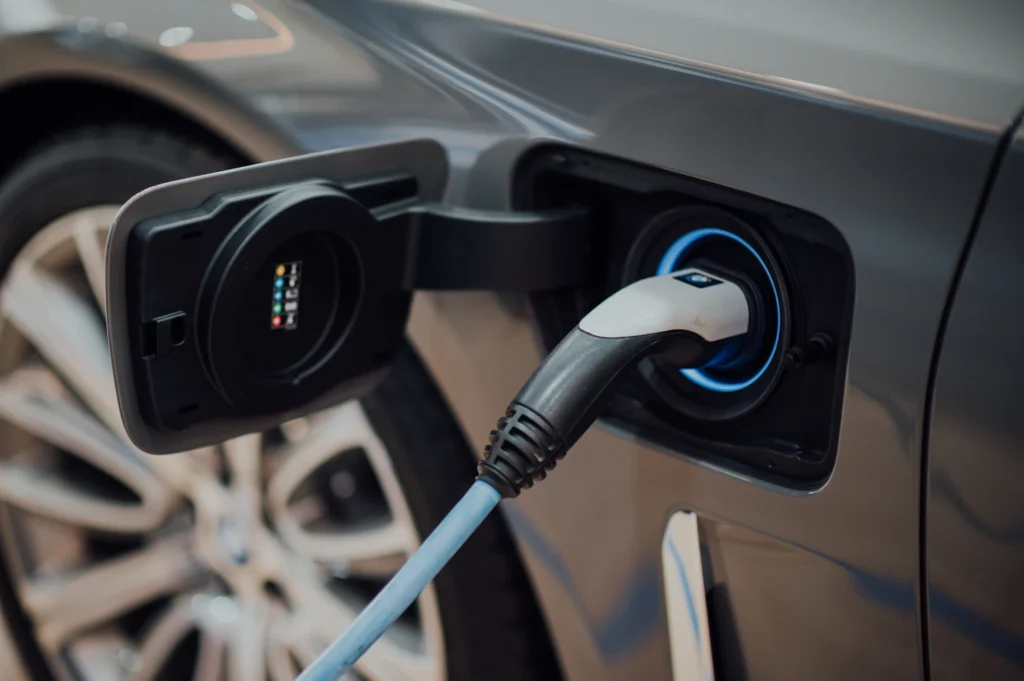
Level 1 Charging: Simple and Slow
Level 1 charging uses the cord set that comes with many EVs. You plug one end into a regular wall outlet and the other into your car. No installation is needed.
How Fast Is It?
Level 1 typically adds roughly 3 to 5 miles of range per hour. Overnight, over about 10 to 12 hours, that works out to around 30 to 50 miles.
Who It Works For
- Drivers with short daily commutes, typically under about 30 to 40 miles.
- Plug-in hybrid owners with smaller batteries.
- Renters or anyone who can’t install new wiring.
- Households with a second car for longer trips.
Things to Watch
- Plug into a dedicated outlet in good condition. Avoid sharing the circuit with other heavy loads.
- Avoid ordinary household extension cords. Follow the charger manufacturer’s instructions.
- In very cold weather, some of the power goes to warming the battery, so charging can feel even slower.
Level 2 Charging: The Everyday Upgrade
A Level 2 charger (technically called EVSE, or electric vehicle supply equipment) is usually wall-mounted in a garage or near a driveway. It’s wired to a dedicated 240-volt circuit or plugged into a 240-volt outlet.
How Fast Is It?
Depending on the charger and your car, Level 2 commonly adds about 20 to 40 miles of range per hour. Most EVs can go from nearly empty to full overnight.
Your actual speed is limited by the slowest of three things:
- The circuit’s capacity (for example, a 40-amp or 50-amp circuit).
- The charger’s maximum output.
- Your car’s onboard charger, which caps how much AC power it can accept.
There’s no benefit to buying a charger that’s more powerful than your car can use, although some people do so to prepare for a future vehicle.
Who It Works For
- Drivers who commute longer distances.
- Households with two EVs.
- Anyone who wants the flexibility of a full battery every morning, even after a long day.
- Owners who want to charge during cheaper overnight electricity hours.
Installing a Level 2 Charger
Installation is where most of the cost and planning comes in. Here’s what to expect.
1. Check Your Electrical Panel
A licensed electrician will check whether your panel has enough spare capacity and physical space for a new 240-volt breaker. Older homes with smaller panels sometimes need an upgrade or a load-management device.
2. Choose Hardwired or Plug-In
- Hardwired: Connected directly to the circuit. Often allows higher power and is a neat, permanent setup.
- Plug-in: Uses a 240-volt outlet (like a NEMA 14-50). Easier to take with you if you move.
3. Permits and Inspection
Many areas require a permit and an inspection for new circuits. A qualified electrician will know the local rules. This isn’t a DIY job for most people; working with 240-volt wiring is dangerous.
4. Consider the Location
Mount the charger where the cable can reach your car’s charging port without stretching or becoming a trip hazard. If it’s outdoors, choose a unit rated for outdoor use.

Cost Considerations
We won’t quote exact prices because they vary a lot by region, but here are the main factors that affect your total:
- The charger itself: Prices vary by brand, power, cable length, and smart features.
- Installation labor: Depends on the distance from your panel to the charger and how difficult the wiring route is.
- Panel upgrades: The biggest potential extra cost, if needed.
- Incentives: Many utilities and local governments offer rebates or special EV electricity rates. Check with your utility before you buy.
Getting two or three quotes from licensed electricians is the best way to understand your real cost.
Smart Charging Features Worth Having
Many Level 2 chargers, and many EVs themselves, offer smart features that can save money:
- Scheduled charging: Start charging automatically during off-peak hours.
- Energy tracking: See how much electricity your car uses each month.
- Load management: Some chargers reduce power when your home is using a lot of electricity.
- Safety certification: Look for a charger that’s safety-certified (for example, UL-listed in the U.S.).
Level 1 vs. Level 2: Quick Decision Guide
- Drive less than about 40 miles a day and can plug in every night? Level 1 may be all you need, at least to start.
- Drive more, have two EVs, or want maximum flexibility? Level 2 is worth it.
- Renting or planning to move soon? Start with Level 1 or a portable plug-in Level 2 unit.
A practical approach many owners use is to start with Level 1 for a few weeks and see whether it keeps up with their routine before paying for an installation.
Conclusion
Home charging is what makes EV ownership easy day to day. Level 1 is free to set up and works well for short commutes. Level 2 costs more upfront but gives you fast, flexible charging that fits almost any schedule. Look at your daily mileage, your home’s electrical setup, and local incentives, then choose the option that fits.
Still deciding whether an EV is right for you? Read our guide on electric vs. gas cars in 2026, or compare hybrids, plug-in hybrids, and EVs. EV brands and charging companies can reach our readers through sponsored placements.