
A warning light suddenly appears on your dashboard. Is it something you can deal with next week, or should you pull over right now? Many drivers aren’t sure, and guessing wrong can turn a small repair into a very expensive one.
This guide explains how dashboard warning lights are organized by color, what the most common lights mean, and exactly what to do when you see them.
Start With the Color
Most manufacturers use a traffic-light color system. Knowing it helps you react quickly even if you don’t recognize the symbol.
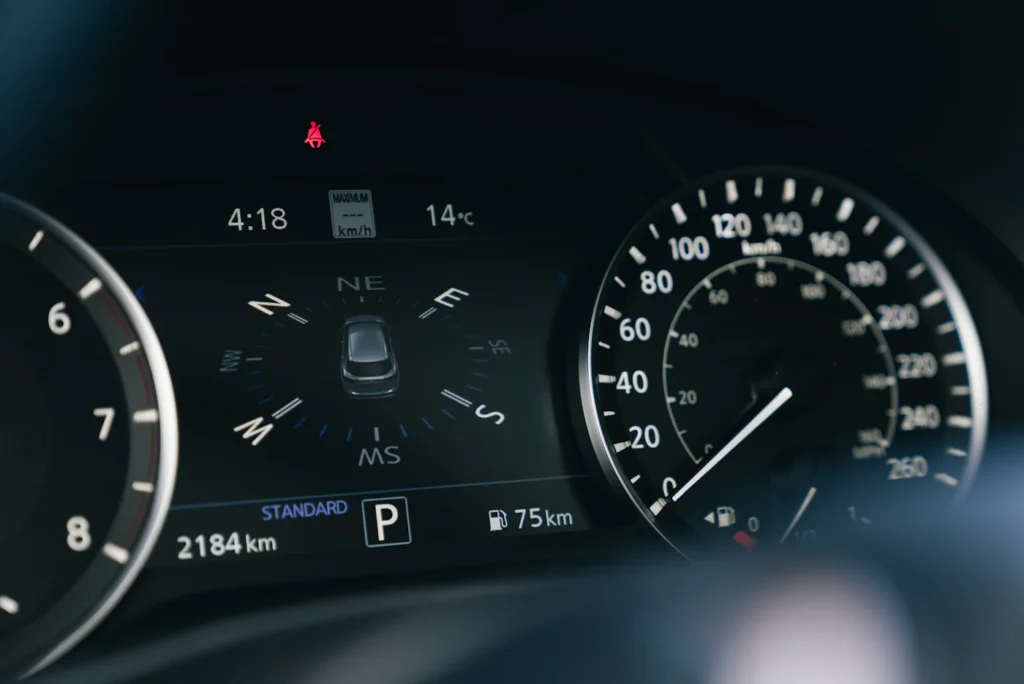
- Red: Stop or act immediately. A red light usually signals a serious problem or a safety issue. Find a safe place to pull over as soon as possible.
- Amber or yellow: Check soon. Something needs attention. You can usually keep driving carefully, but get it checked promptly.
- Green or blue: Information only. These show that a system is on, like headlights, high beams, or cruise control.
One important note: symbols and meanings vary between manufacturers. Your owner’s manual is always the final word for your specific car.
Red Warning Lights: Stop Soon
Oil Pressure Warning
Symbol: An old-style oil can with a drip.
Meaning: The engine has lost oil pressure. Without oil pressure, internal parts can quickly damage each other.
What to do: Pull over safely and turn off the engine as soon as you can. Check the oil level once the engine has cooled. Don’t continue driving until the cause is found, even if adding oil seems to help.
Engine Temperature Warning
Symbol: A thermometer in liquid.
Meaning: The engine is overheating.
What to do: Pull over and turn off the engine. Never open a hot radiator cap or coolant reservoir, because pressurized coolant can cause serious burns. Let it cool, then check the coolant level. Common causes include low coolant, a leak, a failed fan, or a stuck thermostat.
Brake System Warning
Symbol: An exclamation point in a circle, sometimes with the word “BRAKE.”
Meaning: The parking brake may be on, or there may be a problem such as low brake fluid.
What to do: First, make sure the parking brake is fully released. If the light stays on, have the brakes inspected before driving further. Brakes are not something to gamble with.
Charging System / Battery Warning
Symbol: A battery with plus and minus signs.
Meaning: The car’s charging system isn’t working properly. It’s often the alternator, a belt, or wiring, not necessarily the battery itself.
What to do: Turn off non-essential electronics like the radio and seat heaters, and drive to a repair shop if it’s close. The car is running on stored battery power and may stop without warning.
Airbag / SRS Warning
Symbol: A seated person with a circle in front of them.
Meaning: There’s a fault in the airbag system, and the airbags may not deploy in a crash.
What to do: The car will usually drive normally, but get it checked as soon as possible for safety.
Amber Warning Lights: Check Soon
Check Engine Light
Symbol: An engine outline.
Meaning: The engine’s computer has detected a problem. It could be minor, like a loose gas cap, or something more serious.
What to do:
- Steady light: Check that the gas cap is tight. If the light stays on, have the codes read soon. Many auto parts stores offer free code scans, and inexpensive OBD-II scanners are widely available.
- Flashing light: This usually means a severe engine misfire. Reduce speed and get the car checked as soon as possible. Continued driving can overheat and damage the catalytic converter, which is an expensive part to replace.
Tire Pressure Monitoring System (TPMS)
Symbol: A horseshoe shape with an exclamation point inside.
Meaning: One or more tires is significantly underinflated. If the light flashes when you start the car and then stays on, there may be a fault with the TPMS system itself.
What to do: Check all four tires with a gauge and inflate them to the pressure on the driver’s door-jamb sticker, not the number on the tire sidewall. If one tire keeps losing air, have it inspected for a puncture. While you’re there, it’s a good time to check your tire tread depth.
ABS Warning
Symbol: The letters “ABS” in a circle.
Meaning: The anti-lock braking system has a fault. Normal brakes usually still work, but the anti-lock function may not.
What to do: Drive carefully, leave extra stopping distance, and get it checked soon. If the ABS light and the red brake light are on together, treat it as urgent.
Traction or Stability Control
Symbol: A car with wavy skid lines behind it.
Meaning: If it flickers briefly on a slippery road, the system is working. If it stays on, the system may be switched off or have a fault.
Low Fuel
Symbol: A fuel pump.
Meaning: You’re getting low on fuel. Don’t make a habit of running on empty; in many cars, the fuel helps cool the fuel pump.
Green and Blue Indicators
These are status lights, not warnings. Common ones include headlights (green), high beams (blue), turn signals (green arrows), cruise control, and eco-driving mode. If a blue high-beam light is on, remember to dim your lights for oncoming traffic.
A Simple Action Plan
- Notice the color. Red means act now; amber means act soon.
- Check your gauges. Look at the temperature gauge and whether the car feels, sounds, or smells different.
- Pull over safely for any red light, or if the car behaves strangely.
- Check the manual. Most owner’s manuals have a warning light section, and many are available online.
- Get a diagnosis. A code scan and a qualified mechanic can pinpoint the problem.
Prevention: Fewer Lights, Fewer Surprises
Many warning lights can be avoided with routine care: regular oil changes, keeping coolant and brake fluid at the right levels, checking tire pressure monthly, and replacing an aging battery before it fails. Our list of essential car maintenance tips is a good place to start.
Conclusion
Dashboard warning lights are your car’s way of asking for help. Red means stop soon, amber means check soon, and green or blue simply keeps you informed. Take red lights seriously, don’t ignore a flashing check engine light, and keep your owner’s manual handy.
Find more practical driving and maintenance guides on the Toomi Online blog. If you’re a mechanic, auto parts brand, or diagnostic tool company, write for us and share your expertise with our readers.