
Cold weather is hard on cars. Batteries lose power, tires lose pressure, fluids thicken, and roads turn slippery. A little preparation before the first freeze can save you from a dead battery on a dark morning or a long wait on the side of the road.
Use this checklist in the fall, ideally before temperatures regularly drop below freezing, to get your car ready for winter.
1. Test the Battery
Cold temperatures slow the chemical reaction inside a battery, reducing the power it can deliver. At the same time, a cold engine needs more power to start. That combination is why so many batteries fail on the first really cold morning.
- Get it tested. Many auto parts stores and repair shops will test your battery for free.
- Check its age. Many car batteries last around three to five years, though climate and driving habits make a big difference.
- Clean the terminals. White or green corrosion can prevent a good connection.
- Watch for warning signs like slow cranking, dim headlights at startup, or a battery warning light.
2. Check Tires and Consider Winter Tires
Tire Pressure
Tire pressure drops as the temperature falls, roughly 1 PSI for every 10°F drop. Check pressure monthly and after big temperature swings, and inflate to the number on your driver’s door-jamb sticker. Check when tires are cold, before driving.
Tread Depth
Snow and slush demand more tread than dry roads. If your tires are at or below about 4/32″, consider replacing them before winter. Our guide explains how to check tire tread depth in minutes.
Winter Tires
All-season tires are a compromise. Once temperatures stay around 45°F (7°C) or below, their rubber stiffens and grip drops. Winter tires use softer rubber and special tread patterns designed to grip snow and ice. If you live somewhere with regular snow or ice, they’re one of the best safety upgrades you can make. Some regions also have specific rules about winter tires or chains, so check local requirements.
3. Top Up and Check Fluids
- Antifreeze/coolant: Make sure the level is correct and the mixture protects against your area’s lowest temperatures. A shop can test this quickly. Always use the coolant type specified in your owner’s manual.
- Windshield washer fluid: Switch to a winter formula rated for below-freezing temperatures. Summer fluid can freeze in the lines and on the glass.
- Oil: If an oil change is due, get it done before winter. Use the viscosity your manual recommends; some manuals recommend different grades for cold climates.
- Brake fluid: Check the level and condition, as you’ll be relying on your brakes more on slick roads.
4. Wipers, Lights, and Visibility
Winter brings shorter days, slush spray, and road salt that coats your windshield. Being able to see clearly is essential.
- Replace wiper blades if they streak, skip, or chatter. Winter-specific blades are designed to resist ice buildup.
- Test the defroster and rear defogger before you need them.
- Check every light, including headlights, brake lights, and turn signals. Clean cloudy headlight lenses.
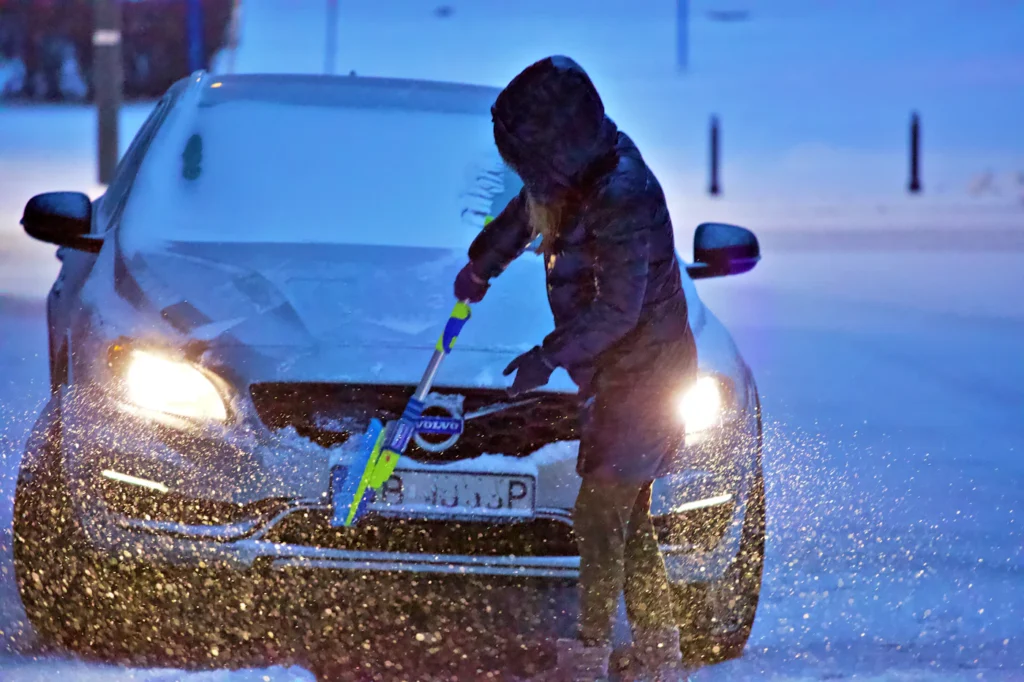
- Carry an ice scraper and snow brush. Clear the whole car, including the roof, before driving. Snow sliding off your roof can blind you or the driver behind you.
5. Inspect Brakes, Belts, and Hoses
Ask your mechanic to check brake pads and rotors, and inspect belts and hoses for cracks. Rubber parts can become more brittle in the cold, and a failed belt or hose in freezing weather is a miserable roadside experience.
6. Pack a Winter Emergency Kit
If you get stuck or break down, having the right supplies can make a real difference. Keep these in your car throughout winter:
- Warm blanket, extra gloves, hat, and socks
- Flashlight with spare batteries
- Jumper cables or a portable jump starter
- Small folding shovel
- Sand, cat litter, or traction mats for grip if you’re stuck
- Ice scraper and snow brush
- Phone charger or power bank
- Water and non-perishable snacks
- Basic first-aid kit
- Reflective triangles or flares
7. Protect Against Salt and Corrosion
Road salt keeps roads safer, but it’s hard on your car’s underbody, brake lines, and paint.
- Wash your car regularly during winter, including an underbody rinse.
- Consider a coat of wax before winter to protect the paint.
- Use rubber floor mats to protect the carpet from salty slush.
8. EV and Hybrid Owners: A Few Extra Tips
Electric vehicles lose some range in cold weather because batteries are less efficient in the cold and cabin heating uses energy.
- Precondition while plugged in. Warm the cabin and battery while the car is still charging, so you start with a full battery.
- Use seat and steering wheel heaters, which use less energy than heating the whole cabin.
- Plan for reduced range on longer trips and charge a little more often.
If you’re charging at home, our guide to Level 1 vs. Level 2 home charging explains how faster charging helps in winter.
Safe Winter Driving Habits
- Keep your fuel tank at least half full, or your EV well charged, in case you get stuck.
- Accelerate and brake gently, and increase your following distance significantly.
- Slow down before curves and bridges, which often freeze first.
- If you get stuck in snow, keep the exhaust pipe clear to prevent carbon monoxide buildup inside the car.
Winter Car Care FAQ
When should I start preparing my car for winter?
Aim for early to mid-fall, before overnight temperatures regularly drop below freezing. That gives you time to book a battery test, tire change, or service appointment before shops get busy.
Should I let my car warm up before driving in winter?
Most modern cars only need about 30 seconds to a minute before driving gently. Long idling wastes fuel and doesn’t warm the transmission or tires. Clear all snow and ice first, then drive smoothly for the first few miles.
Do I really need winter tires if I have all-wheel drive?
All-wheel drive helps you accelerate on slippery roads, but it doesn’t help you stop or turn. Tires provide the grip for all three, which is why winter tires make a big difference even on AWD vehicles.
Conclusion
Preparing your car for winter doesn’t take long. Test the battery, check your tires, top up winter-ready fluids, make sure you can see clearly, and pack an emergency kit. An hour of preparation in the fall can prevent a lot of trouble when the temperature drops.
For more seasonal car care, visit the Toomi Online blog. Tire shops, auto service businesses, and car care brands can reach drivers before winter through our guest post packages.