
Shopping for a more efficient car often leads to a confusing set of labels: hybrid, plug-in hybrid, mild hybrid, EV, BEV. They all use electricity in some way, but they work very differently and suit very different drivers.
This guide explains how each type works, what living with it is like, and how to choose the one that fits your daily routine.
The Three Main Types at a Glance
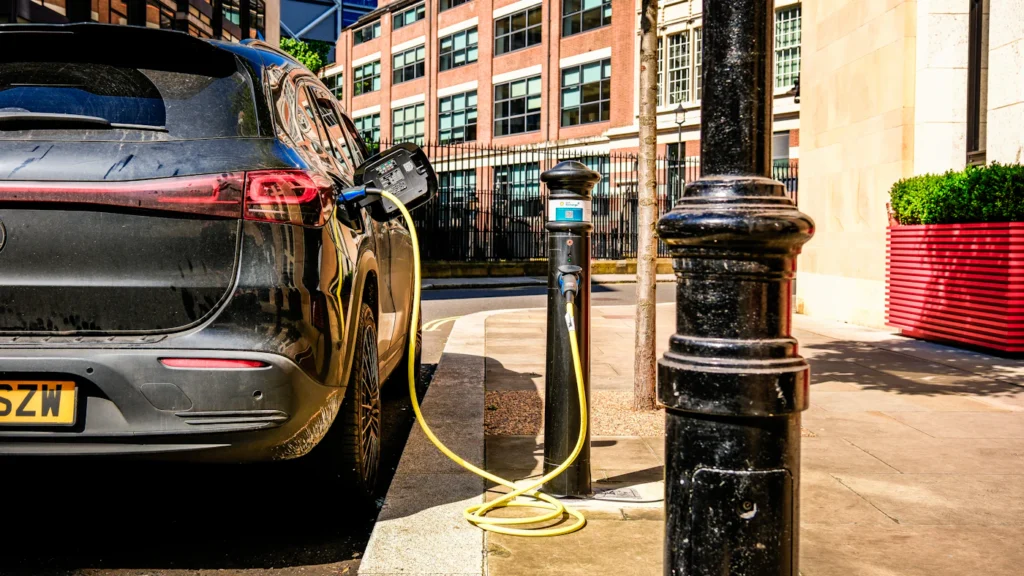
- Hybrid (HEV): Gas engine plus a small battery and electric motor. You never plug it in.
- Plug-in hybrid (PHEV): Gas engine plus a larger battery you can charge from the grid. Drives a limited distance on electricity alone.
- Battery electric vehicle (EV or BEV): No gas engine at all. Runs entirely on a large rechargeable battery.
Traditional Hybrids (HEV)
How They Work
A traditional hybrid combines a gasoline engine with an electric motor and a small battery. The battery charges itself through regenerative braking, which captures energy when you slow down, and from the engine. The electric motor helps at low speeds and during acceleration, so the engine works less.
The Upside
- No change in habits. You fill up at a gas station like always.
- Noticeably better fuel economy than similar gas-only cars, especially in city driving.
- Usually priced closer to gas cars than PHEVs or EVs.
- Many hybrid models have strong reliability reputations.
The Downside
- Still relies entirely on gasoline.
- Can’t drive meaningful distances on electricity alone.
Best for: Drivers who want better fuel economy with zero lifestyle changes, especially those without access to home charging.
A quick note on “mild hybrids”: Some cars use a small electric system mainly to assist the engine and power start-stop features. They save some fuel, but they can’t drive on electric power alone like a full hybrid can.
Plug-In Hybrids (PHEV)
How They Work
A PHEV has a bigger battery than a regular hybrid, which you charge by plugging in. It can typically drive somewhere around 20 to 50 miles on electricity alone, depending on the model, before the gas engine takes over. After that, it drives like a regular hybrid.
The Upside
- Many daily commutes can be done entirely on electricity if you charge regularly.
- The gas engine removes range anxiety on long trips.
- Home charging is easy. Many PHEVs charge fully overnight on a standard outlet.
The Downside
- You only get the big benefits if you actually plug in regularly. An uncharged PHEV is just a heavier hybrid.
- Two powertrains means more components to maintain than an EV.
- Often more expensive upfront than a comparable hybrid.
Best for: Drivers with short daily commutes and home or workplace charging who also take frequent long trips.
Battery Electric Vehicles (EV)
How They Work
An EV runs only on electricity stored in a large battery pack. There’s no gas engine, no oil changes, and no exhaust pipe. You charge at home, at work, or at public charging stations, including DC fast chargers for road trips.
The Upside
- No gasoline at all, and charging at home is often cheaper per mile than fuel, depending on local electricity rates.
- Fewer moving parts and simpler routine maintenance.
- Smooth, quiet, and quick acceleration.
- Zero tailpipe emissions.
The Downside
- Road trips require planning around fast-charging stations.
- Range drops in very cold weather.
- Much less convenient without home or workplace charging.
- Upfront prices can be higher, although incentives and the used market can change the picture.
Best for: Drivers who can charge at home or work and whose trips are mostly within the car’s range.
For a deeper look at the all-electric option, read our guide on electric vs. gas cars.
Running Costs Compared
Exact costs depend on local fuel and electricity prices, but general patterns hold:
- Fuel/energy: EVs usually cost the least per mile when charged at home, followed by PHEVs driven mostly on electricity, then hybrids.
- Maintenance: EVs skip oil changes, spark plugs, and exhaust repairs. Regenerative braking also helps brake pads last longer in all three types.
- Tires: EVs are heavy and have instant torque, so tires may wear a bit faster. Rotate them regularly and check the tread.
- Insurance and purchase price: These vary widely by model, so get quotes before deciding.
How to Choose: Ask Yourself These Questions

- Can I charge at home or work? If not, a traditional hybrid is usually the easiest choice.
- How far do I drive on a typical day? If it’s within a PHEV’s electric range, you could drive mostly on electricity.
- How often do I take long road trips? Frequent long trips in areas with few fast chargers may favor a hybrid or PHEV.
- What’s my climate? Very cold winters reduce EV range, so choose a model with enough range buffer.
- What’s my budget, including incentives? Check current local and national incentives, which change over time.
Quick Recommendations
- No home charging, lots of city driving: Hybrid.
- Home charging, short commute, frequent long trips: Plug-in hybrid.
- Home charging, mostly local driving, access to fast chargers: EV.
Frequently Asked Questions
Do hybrids need to be plugged in?
No. Traditional hybrids charge their small battery automatically through braking and the gas engine. Only plug-in hybrids and fully electric vehicles need to be plugged in.
What happens if a plug-in hybrid runs out of battery?
Nothing dramatic. The gas engine takes over and the car drives like a regular hybrid. You’ll simply use more fuel until you charge again.
How long do EV and hybrid batteries last?
Battery life depends on the model, climate, and how the car is used. Many manufacturers offer long battery warranties that often run for years longer than the standard vehicle warranty. Check the specific warranty terms for any car you’re considering.
Are electrified cars more expensive to insure?
Sometimes. Insurance depends on the car’s value, repair costs, and your own driving record. Get quotes for the specific models you’re comparing before you buy.
Conclusion
There’s no single “best” electrified car. Hybrids offer easy fuel savings, plug-in hybrids give you electric commuting with a gas backup, and EVs deliver the lowest running costs for drivers who can charge conveniently. Match the car to how you actually drive, and you’ll be happy with your choice.
Thinking about going electric? Learn how home EV charging works. Automotive brands and dealers can showcase their hybrid and EV models to our readers through our advertising options.